

September 2026
Wat is lymfedrainage? En waarom is het belangrijk voor een frisse, gezonde huid?
De kans is groot dat je de term lymfedrainage de laatste tijd al eens bent tegengekomen. Op sociale media zie je video's van gezichtsmassages, gua sha-routines en rollers die beloven een strakkere kaaklijn en een gladdere huid te creëren.
Maar wat is lymfedrainage nu eigenlijk?
En welke rol speelt het lymfestelsel in de gezondheid en uitstraling van je huid?
In deze blog leggen we uit hoe het lymfestelsel werkt, waarom je gezicht 's ochtends soms gezwollen aanvoelt en hoe een combinatie van gezonde gewoontes en koude therapie een verfrissend onderdeel van je skincare routine kan zijn.
Wat is het lymfestelsel?
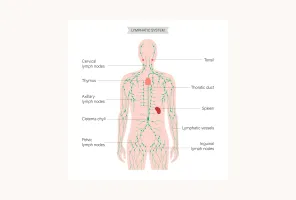
Naast je bloedvaten beschikt je lichaam over een tweede belangrijk transportsysteem: het lymfestelsel.
Dit netwerk van lymfevaten, lymfeklieren en lymfevocht helpt je lichaam onder andere bij:
° het afvoeren van overtollig vocht uit weefsels
° het transporteren van afweerstoffen en immuuncellen
° het ondersteunen van je natuurlijke afweer
het terugbrengen van vocht naar de bloedbaan.
In tegenstelling tot de bloedsomloop heeft het lymfestelsel geen eigen pomp, zoals het hart. De beweging van lymfevocht is daarom afhankelijk van onder andere spierbeweging, ademhaling en de natuurlijke samentrekking van de lymfevaten.
Waarom wordt je gezicht soms gezwollen wakker?
Ben je ooit wakker geworden met een opgezwollen gezicht of wallen onder je ogen?
Dat is heel normaal.
Tijdens je slaap lig je urenlang in dezelfde houding. Hierdoor kan vocht zich tijdelijk ophopen, vooral rond de ogen, de wangen en de kaaklijn. Ook factoren zoals:
° een zoute maaltijd
° alcohol
° weinig slaap
° hormonale schommelingen
° warme temperaturen
kunnen ervoor zorgen dat je gezicht er 's morgens voller uitziet.
Gelukkig is dit meestal tijdelijk en trekt het vanzelf weer weg zodra je lichaam in beweging komt.
Wat betekent lymfedrainage voor je gezicht?
Lymfedrainage verwijst naar het natuurlijke proces waarbij overtollig vocht wordt afgevoerd via het lymfestelsel.
Wanneer dit vocht zich tijdelijk ophoopt, kan je gezicht er:
° gezwollen
° vermoeid
° minder strak uitzien.
Een zachte gezichtsmassage of lymfedrainagemassage kan helpen om dit vocht tijdelijk te verplaatsen, waardoor veel mensen merken dat hun gezicht minder "puffy" oogt. De effecten zijn voornamelijk cosmetisch en doorgaans tijdelijk.
Welke rol speelt koude therapie?
Ook koude therapie is de laatste jaren enorm populair geworden als onderdeel van een ochtendroutine.
Wanneer je je gezicht kort onderdompelt in koud water:
° trekken de oppervlakkige bloedvaten tijdelijk samen
° kan de zichtbaarheid van zwelling tijdelijk verminderen
° voelt de huid frisser en steviger aan
Veel mensen ervaren hierdoor een wakker en verfrist gevoel aan het begin van de dag. De zichtbare effecten zijn meestal van korte duur, maar kunnen een mooie aanvulling zijn op een consistente skincare routine.
Hoewel koude therapie vaak wordt geassocieerd met lymfedrainage, is er op dit moment beperkt wetenschappelijk bewijs dat koud water de lymfedrainage bij gezonde mensen rechtstreeks stimuleert.
De zichtbare vermindering van puffiness wordt waarschijnlijk vooral verklaard door de tijdelijke vernauwing van de bloedvaten (vasoconstrictie).

CryoSplash® als onderdeel van je ochtendroutine
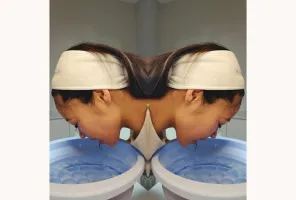
Met de CryoSplash® creëer je eenvoudig een gelijkmatig ijswaterbad voor je volledige gezicht.
In plaats van slechts één klein deel van je huid te koelen, worden je:
° voorhoofd
° wangen
° ogen
° neus
° kaaklijn
tegelijkertijd verfrist.
Veel gebruikers kiezen ervoor om hun gezicht 10 tot 20 seconden onder te dompelen, even te ademen en dit enkele keren te herhalen. Zo wordt koude therapie een eenvoudig moment van selfcare dat gemakkelijk in je ochtendroutine past.
Wat kun je nog meer doen om een opgezwollen gezicht te verminderen?
Naast koude therapie zijn er verschillende dagelijkse gewoontes die kunnen bijdragen aan een frisse uitstraling:
✔ Drink voldoende water.
✔ Zorg voor voldoende beweging.
✔ Slaap voldoende.
✔ Beperk overmatig zout- en alcoholgebruik.
✔ Masseer je gezicht zachtjes of gebruik face yoga.
Samen ondersteunen deze gewoontes de natuurlijke vochtbalans van je lichaam en kunnen ze helpen om een vermoeide uitstraling te verminderen.
Een kleine gewoonte met een groot verschil
Je lymfestelsel werkt dag en nacht om overtollig vocht af te voeren en je lichaam in balans te houden.
Hoewel geen enkele behandeling wonderen verricht, kunnen gezonde leefgewoontes, een consistente skincare routine en een verfrissend moment met de CryoSplash® bijdragen aan een frisse, uitgeruste uitstraling.
Soms zijn het juist de kleine dagelijkse gewoontes die het grootste verschil maken.

May 2026
What is face yoga?
Face yoga consists of a series of gentle exercises where you consciously tense and relax the muscles in your face. Just like traditional yoga, it’s not only about movement, but also about relaxation and awareness.
Your face contains more than 40 different muscles. Many of them are used daily — when talking, smiling, and frowning — often without even realizing it. This can create tension, especially around:
the forehead
the jaw
around the eyes
the neck and cheeks
By practicing face yoga regularly, you may:
° Reduce facial tension
° Stimulate circulation
° Create a more relaxed appearance
° Give your skin a natural glow
But the real difference happens when you combine these exercises with cold therapy.
Face Yoga & CryoSplash®: the perfect combination for fresh, relaxed skin
Face yoga has become incredibly popular in recent years — and for good reason. By combining targeted facial exercises with cold therapy, such as with the CryoSplash®, you can help your skin look visibly fresher while reducing tension in your face.
But how exactly does this combination work? And why do face yoga and cold water complement each other so well?
In this blog, we explain it step by step.
Why cold water pairs perfectly with face yoga
Cold therapy — such as immersing your face in ice water with the CryoSplash® — has been used for centuries to refresh and calm the skin.
When your face is exposed to cold water:
° blood vessels temporarily constrict
° swelling may be reduced
° the skin feels tighter and fresher
° you feel more awake and alert
After face yoga, your facial muscles are activated and circulation is increased. Using cold water afterward helps calm both your skin and muscles again.
Think of it as the cool-down after a workout — but for your face.
The ideal routine: Face yoga + CryoSplash®
You don’t need an extensive routine. Just a few minutes a day can already make a difference.
Step 1 — Relax your face (2 minutes)
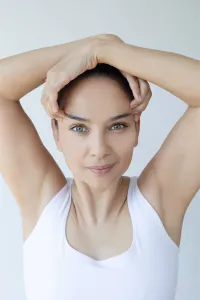
Start with simple face yoga exercises, such as:
° gently lifting your eyebrows
° slightly tightening your cheeks
° consciously relaxing your jaw
° taking slow deep breaths
This helps release tension and activates the facial muscles.
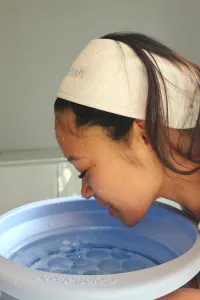
Step 2 — Cool your face with CryoSplash® (30–60 seconds)
Fill your CryoSplash® with cold water and ice and briefly immerse your face.
You can do this in short intervals, for example:
° immerse for 10–15 seconds
° take a breath
° repeat for 1–2 minutes
The cold sensation helps your skin instantly feel fresher.
Step 3 — Apply your serum or moisturizer
After the cold treatment, your skin often feels:
° calmer
° fresher
° better prepared for skincare
This is a great moment to apply your favorite serum or moisturizer.
(Tip: usually apply products after the cold treatment, not during.)
Which face yoga exercises work best with CryoSplash®?
Here are a few simple exercises that pair well with cold therapy:
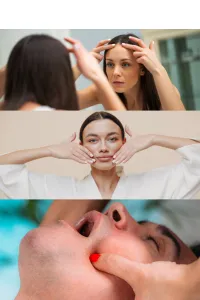
1. The Forehead Relaxer
Place your fingers on your forehead and gently pull the skin upward while relaxing.
Great for:
° tension headaches
° frown lines
° stress around the forehead
2. The Cheek Lifter
Create a soft smile and gently lift your cheeks upward.
Great for:
° the cheeks
° a natural lift
° a fresh appearance
3. The Jaw Release
Slightly open your mouth and slowly move your jaw from side to side.
Great for:
° jaw tension
° teeth grinding
° stress reduction
After these exercises is the perfect moment to briefly immerse your face in cold water.
Why an ice globe may be less ideal than ice water
Many people use ice rollers or ice globes, but these often create very concentrated cold on one specific area.
This can:
° feel too intense
° overstress the skin locally
° provide less even cooling
With an ice water bath like the CryoSplash®, the cold is distributed evenly across the entire face. This often feels more comfortable and calming.
How often can you use face yoga and CryoSplash®?
For most people, it works well to do this:
Once a day — as a morning routine
or
2–3 times a week — as a relaxation moment
Always listen to your skin and build up gradually.
Who is this combination suitable for?
Face yoga combined with cold therapy may be interesting for people who want to:
° achieve a natural glow
° start the day feeling refreshed
° reduce tension in the face and jaw
° create a relaxing self-care moment
° enhance their skincare routine
Finally: a small routine with a big impact
Face yoga and cold therapy are both simple techniques, but together they form a powerful combination.
With just a few minutes a day, you can:
° relax your face
° refresh your skin
° create a moment of calm in a busy day
The CryoSplash® makes this routine easy and comfortable — without hassle, without extreme cold on one spot, but with an evenly refreshing effect.
March 2026

Stop Acne Scars Before They Start:
Natural Remedies to Reduce Inflammation
I understand. If you're struggling with acne, you know how discouraging it is to deal with yet another breakout. But the fear of developing long-term scars makes that burden even heavier. The good news is that acne scars can be prevented. By acting early, you can protect your skin and avoid permanent marks.
In this article, I share natural remedies and lifestyle tips that focus on reducing inflammation — the main cause of acne scars — and supporting your skin’s natural healing ability. This isn’t just about treating existing scars; it’s about taking proactive steps to prevent them before they appear.
Understanding the Causes of Acne Scars
What Causes Acne Scars?
First of all, to prevent scars it is important to understand how they form. Acne scars develop when the skin experiences significant damage caused by inflamed pimples. The deeper and longer the inflammation lasts, the greater the risk of scarring.
When the body tries to heal an inflamed acne spot, it can sometimes break down surrounding skin tissue. This can lead to visible scars. Picking or squeezing pimples only worsens the damage and increases the chance of permanent scars.
The Role of Inflammation in Scar Formation
Inflammation is a natural defense mechanism of the body. However, in the case of acne, excessive inflammation can lead to deeper skin damage and eventually scars.
The key to preventing acne scars is controlling inflammation as early as possible, focusing on calming the skin with natural remedies.
How to Prevent Acne Scars Naturally
Keep Your Skin Clean and Hydrated
A basic skincare routine forms the foundation for preventing acne scars. Cleansing your skin with gentle, natural cleansers such as honey or oatmeal removes impurities without irritating or drying out your skin.
It is important to follow this with a lightweight, non-comedogenic moisturizer. This keeps your skin hydrated and supports the natural healing process.
Pro Tip:
Look for products labeled “non-comedogenic.” These products are specifically designed not to clog pores.
Keeping your skin properly hydrated helps speed up healing and reduces the risk of scars forming.
Don’t pick or squeeze your acne
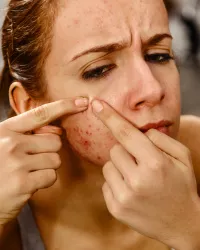
I know it can be tempting to pop a pimple, but doing so only increases inflammation and the likelihood of permanent scars. Picking at acne causes additional damage to the skin and interferes with the body’s natural healing process.
If you're struggling to keep your hands off your face, try keeping your hands busy or use targeted spot treatments to help resist the temptation.
Manage Inflammation with Natural Remedies
Reducing inflammation is essential to preventing scars. Fortunately, nature offers several effective remedies to soothe inflamed skin.
Aloe Vera
• Aloe vera has cooling and anti-inflammatory properties, making it ideal for calming irritated skin. Apply fresh aloe vera gel directly to your skin to reduce redness and promote healing.
Green Tea
• Rich in antioxidants, green tea helps fight inflammation from the inside out. You can drink it daily or apply cooled tea bags directly to acne-prone areas to reduce swelling and redness.
Tea Tree Oil
• Known for its antimicrobial properties, tea tree oil can help fight the bacteria that cause acne while also reducing inflammation. Mix a few drops with a carrier oil such as coconut oil and apply it to problem areas.
Can Home Remedies Prevent Acne Scars?
Many people wonder whether natural remedies truly help prevent scarring. While natural treatments may not work for every case, they are often very effective for mild to moderate acne and can significantly reduce the risk of scarring when used consistently.
Ingredients such as turmeric (with powerful anti-inflammatory properties) and rosehip oil (rich in skin-repairing vitamins A and C) are excellent options for keeping your skin healthy and supporting recovery.
If you are dealing with more severe or persistent acne, home remedies may need to be combined with professional advice. However, early intervention with natural treatments can often make a noticeable difference and help prevent scars from becoming deep or permanent.
How Long Does It Take for Acne Scars to Fade?
How Prevention Can Shorten Healing Time
If acne scars do form, the healing process can take anywhere from a few months to a year, depending on their severity.
However, by focusing on prevention and reducing inflammation, you can prevent deep scars from forming in the first place, allowing your skin to recover more quickly.
When severe inflammation is prevented, you give your skin the best chance to heal without lasting damage.
The Impact of Sun Exposure on Healing Scars
Sun exposure can darken scars and make them more noticeable. If you're trying to heal acne scars or prevent new ones, it is important to wear sunscreen daily or choose a natural sunblock such as zinc oxide.
Protecting your skin from UV rays gives it the best chance to heal without additional pigmentation.
Different Types of Acne Scars and How to Prevent Them
Identifying Different Types of Acne Scars
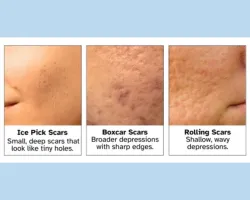
There are several types of acne scars. Knowing which type you may be prone to can help you take the right steps to prevent them.
Common types include * see photo.
Tips to Prevent Different Scar Types
For each type of scar, prevention is possible with the right approach:
To prevent ice pick scars, it is important to reduce inflammation early by incorporating anti-inflammatory foods such as turmeric and ginger into your diet. These foods help calm your skin from within.
Boxcar scars can often be prevented by keeping your skin well hydrated. Hydrated skin is more elastic and can heal faster, reducing the risk of deeper scars.
For rolling scars, using natural exfoliants such as a sugar scrub once or twice per week can help stimulate new skin cell growth, keeping your skin smoother and less prone to scarring.
Can Stress Make Acne Scars Worse?
The Connection Between Stress, Inflammation, and Acne Scars
Stress is often an overlooked factor when it comes to acne and scarring. When you experience stress, your body produces more cortisol — a hormone that increases inflammation and can worsen acne.
This can lead to more severe breakouts, which in turn increases the risk of scarring.
Managing stress effectively is therefore essential for controlling both acne and inflammation.
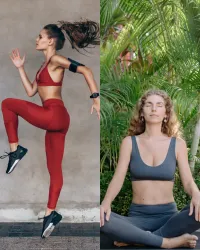
Natural Stress-Reduction Techniques
Reducing stress can help prevent acne from worsening and minimize the risk of scars. Consider these natural stress-management methods.
Meditation and Mindfulness
Regular mindfulness practices reduce cortisol levels, which can lower inflammation and help your skin heal more effectively.
Exercise
Physical activity promotes better circulation and reduces stress hormones. This supports skin healing and helps prevent acne from worsening.
Lifestyle Tips to Prevent Acne Scarring
Ice Water Facials: A Natural Way to Reduce Inflammation and Stress
Ice water facials are a simple yet highly effective way to reduce inflammation and help prevent acne scars.
The cold temperature constricts blood vessels, reducing redness and swelling in acne-prone areas. This can help prevent deeper scars from forming.
Beyond the skin benefits, ice water facials also stimulate the vagus nerve. This helps lower stress levels and promotes better sleep — two factors that are essential for healthy skin recovery.
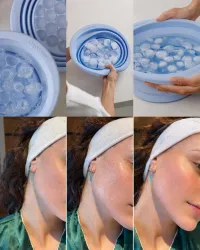
To get the most out of your ice water facial, you can add natural ingredients such as aloe vera or green tea to the water for additional anti-inflammatory benefits.
If you're looking for a convenient way to integrate this into your routine, the CryoSplash® facial bowl can be a practical tool. Its collapsible silicone design, built-in ice cube molds, and freezer-friendly format make it easier to prepare and perform ice water facials at home.
It is a practical addition to any skincare routine for those looking to reduce inflammation and help prevent acne scars.
Conclusion
Acne is already challenging enough without the added worry of permanent scars. Fortunately, with the right approach you can significantly reduce the risk of scarring.
By focusing on early intervention and reducing inflammation, and by using natural remedies such as aloe vera, green tea, and turmeric, you support your skin’s natural healing process and avoid lasting damage.
Remember that your lifestyle also plays a major role. Managing stress, eating anti-inflammatory foods, and protecting your skin from sun exposure are all essential steps in preventing scars.
Preventing acne scars is not about short-term fixes. It is about building long-term habits that protect your skin.
By incorporating soothing remedies and staying consistent with your skincare routine, you can make a significant difference over time.

2026: 26 Conscious habits for happiness, health and personal growth
January 2026
When the clock strikes midnight on New Year’s Eve, millions of people around the world pause to reflect. What do I want to let go of? What do I want to strengthen? And how can I make the coming year my best one yet?
For 2026, the key does not lie in extreme resolutions, but in conscious, intentional habits. Small actions, repeated daily, form the foundation for sustainable health, mental clarity and personal growth.
Whether you’re looking for inspiration for New Year’s resolutions, new routines for happiness, or proven habits that truly work — this guide is designed to give you direction.
We’ve gathered 26 transformative habits, based on science and real-life practice, to help you grow mentally, physically and emotionally in 2026.
Happiness is not an accident — it’s something you cultivate
Happiness is not a destination, but a daily process. It’s often not the big events, but the small choices that determine how fulfilled you feel. By consciously investing in your emotional well-being, you create more calm, resilience and gratitude in your life.
Start your day with gratitude
Gratitude has a measurable effect on the brain. Neuroscientific research shows that regularly expressing gratitude strengthens neural pathways linked to positive emotions. Writing down three things you’re grateful for each morning trains your brain to focus less on stress and more on what’s going well.
This mental reprogramming improves mood, lowers stress and supports a more optimistic outlook. Visual tools like a gratitude journal or gratitude tree can help make this habit stick.
Listen to calming music daily
Classical music is more than beautiful — it supports mental clarity and relaxation. Composers like Mozart and Beethoven are linked to reduced stress and improved focus.
Listening to calm music for around 30 minutes a day creates a soothing anchor in your routine.
Practice mindfulness or meditation
Mindfulness helps you return to the present moment. For those who find it difficult to “quiet the mind”: that is normal. Start small. Even five minutes a day is enough to reduce stress and improve your concentration.
Apps and guided meditations can help, but the essence remains simple: sit, breathe, be present.
Regulate your nervous system consciously
Breathing techniques such as the 4-7-8 method (inhale for 4 seconds, hold for 7 seconds, exhale for 8 seconds) help your body shift into relaxation. This technique lowers your heart rate, increases oxygen flow and activates your parasympathetic nervous system — the part responsible for rest and recovery.
Celebrate small wins
Big goals are motivating, but small successes create momentum. Acknowledge them — they build confidence and consistency.
Spend time outdoors
Nature and daylight lower cortisol levels, improve mood and refresh the mind.
Prioritize social connection
Happiness grows through connection with others. Regular contact with friends, family or loved ones — no matter how simple — is one of the strongest predictors of long-term well-being.
Focus on what you can control
Not everything is within your control. By directing your energy to what you can influence — your reactions, your choices, your routines — you increase your resilience and inner calm.
Limit negative media
Your mental space is precious. Excessive exposure to negative news or stimuli can be draining. Choose content that informs without overwhelming you.
Keep nourishing your hobbies
Hobbies are not a luxury, but essential for balance. Creative or physical activities help you recharge and reconnect with what gives you energy.
Healthy habits as the foundation of energy
Physical health is the basis of a vital life. Small, consistent adjustments make a big difference here.
Develop a daily habit of mental presence
In a world full of distractions, we often live on autopilot. Our thoughts drift toward what still needs to happen or what has already passed. By consciously practicing moments of mental presence, you learn to return to the present moment.
Mental presence does not mean stopping your thoughts, but learning to observe them without getting carried away by them. This can be as simple as a few minutes of mindful breathing each day, walking with awareness, or being fully present during an everyday activity such as eating or showering.
This habit helps you recognize stress more quickly, respond more calmly, and experience greater clarity in your daily life. By regularly pausing to return to the present, you create more focus and emotional stability — without needing a fixed or elaborate ritual.
Short, intense workouts
HIIT (High-Intensity Interval Training) combines short bursts of effort with rest periods. Just 20 minutes, three times a week, significantly improves cardiovascular fitness, fat burning and muscle strength.
Intermittent fasting
The 16:8 method — fasting for 16 hours, eating within an 8-hour window — supports metabolic health. During fasting, your body switches to fat burning and activates repair processes such as autophagy. Build this up gradually and listen to your body.
Heat for recovery
Regular use of a sauna or other heat supports heart health, relaxation and muscle recovery. It is also a valuable moment of mental rest.
Cold exposure for circulation and mood
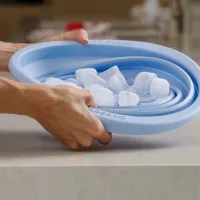
Cold therapy stimulates blood circulation, strengthens the immune system and increases the production of mood-enhancing substances.
Those who do not want to take a full ice bath can also choose cold facial treatments, which have a similar effect on circulation and the nervous system.
Maintain a consistent sleep pattern
A regular sleep rhythm supports your biological clock and improves the quality of your rest. Aim for 7 to 8 hours per night, even on weekends.
Take regular breaks during work
Sitting for long periods affects posture, energy and focus. Short movement breaks throughout the day keep both body and mind alert.
Limit screen use in the evening
Blue light disrupts sleep. By staying screen-free for at least one hour before bedtime, you improve sleep quality.
Be mindful of nutrition and hydration
Understanding what you eat and drink helps you recognize patterns and make better choices.
Personal growth is a continuous process
Persoonlijke groei stopt nooit. Het is een proces van blijven leren, reflecteren en bewust kiezen voor ontwikkeling, stap voor stap.
Set weekly goals
By breaking big ambitions into achievable weekly goals, you stay focused and motivated.
Read a little every day
Ten pages a day is a manageable way to build knowledge and broaden your perspective.
Write regularly in a journal
Journaling helps process emotions, reflect and clarify intentions.
Do something uncomfortable every day
Growth happens outside your comfort zone. Small challenges build long-term confidence and resilience.
Track where your time, money and attention go
Conscious living begins with insight. By tracking your resources, you make choices that align better with your values.
Learn a new skill every quarter
New skills keep your mind flexible and open new opportunities.
Create a fixed ritual to regulate your nervous system
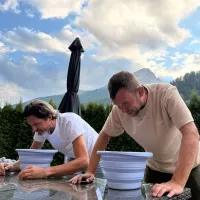
A fixed ritual helps your body shift from “on” to “rest and recovery.” Think of breathing exercises, meditation, warmth (such as a sauna) or cold therapy. These techniques activate the parasympathetic nervous system, reduce stress and support focus and emotional balance.
Choose one consistent moment each week to consciously slow down. It doesn’t have to be long — consistency matters more than duration. By making this ritual part of your routine, you actively invest in more calm, recovery and mental clarity in 2026.
Closing thought
Not perfect. But consistent.
That is how you shape 2026.
Change does not happen overnight. It is the small, repeated choices that determine the direction of your life.
2026 is not a blank page that must be filled perfectly, but a canvas that grows with every conscious step.
A new year begins with conscious moments.
CryoSplash wishes you a refreshing year filled with calm, glow and self-care...

The power of the vagus nerve: how cold therapy calms your nervous system
November 2025
Fortunately, you can restore balance to your nervous system in simple, natural ways — through breathing, meditation, and cold therapy.
What exactly is the vagus nerve?
The vagus nerve is the longest nerve in your body and acts as a communication line between your “head” and your “gut” — connecting thoughts, emotions, and physical functions. It helps determine whether your body is in a “fight or flight” state or a “rest and digest” mode.
When this nerve functions well, you experience greater relaxation, a lower heart rate, and better stress regulation.
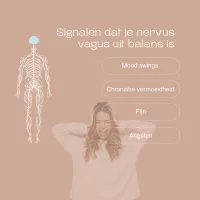
Signs your vagus nerve may need extra care
• You often feel tense or emotionally unsettled.
• You feel tired all the time, even after sleeping well.
• You experience inflammatory symptoms, muscle or joint pain without clear cause.
• Your emotions flare up easily, or your recovery after exertion is slow.
When you recognize these signs, it’s time to consciously support your parasympathetic nervous system — of which the vagus nerve is a key part.
Why natural stimulation is so powerful
By stimulating your vagus nerve naturally, you can enhance your stress resilience, improve heart rate variability (a measure of vitality), and strengthen your overall well-being.
No invasive treatment required — small daily rituals can make a big difference.
Practical ways to support your vagus nerve
° Breathing exercises
– Conscious breathing reduces the body’s stress signals. Try belly breathing or box breathing (inhale 4s, hold 4s, exhale 4s, hold 4s).
° Cold exposure
– One of the most effective ways to awaken your parasympathetic system.
Try:
• Cold showers: finish your shower with 30–120 seconds of cold water.
• Full-body ice baths: powerful, but more intense and time-consuming.
• Facial ice bowl: perfect for home use — simple and effective. Fill your CryoSplash® bowl with cold water and dip your face for 10–15 seconds. You’ll stimulate the vagus nerve via the facial reflex, lower your heart rate, and bring calm to your nervous system.
° Meditation & mindfulness
– Sitting still, breathing, being present: these are powerful triggers for your parasympathetic system. Try extending your exhale — this subtly activates the vagus nerve.
° Yoga & Tai Chi
– Slow movement combined with breath gives your system room to relax. Poses like child’s pose, cat-cow, or a soft Tai Chi flow work beautifully.
° Massage / self-massage
– Massage around your neck, ears, or feet can directly stimulate the vagus nerve. Even a quick self-massage after a long day can help release stress.
How CryoSplash® fits into your routine
Our goal is to make cold therapy accessible for your daily wellness moment. After a breathing session, yoga flow, or skincare ritual, immerse your face in the CryoSplash® ice facial bowl 3–4 times a week. It’s quick (10–15 sec), comfortable, and has an immediate calming effect on your nervous system and skin. Keep it ready in your bathroom or beauty space for easy integration.
Tips & reminders
• Start slowly: if you’re new to cold exposure, begin with 10–15 seconds and gradually build up.
• Be cautious with heart or circulation issues — consult your doctor if needed.
• Hygiene matters: rinse your bowl after each use; it’s dishwasher safe.
• Consistency is key — small daily habits work better than occasional extremes.
Conclusion
The vagus nerve is a key player in how your body handles stress, recovery, and balance. By including simple, natural techniques — like breathing, meditation, yoga, and cold exposure — you can support your nervous system and enhance your well-being.
With the CryoSplash® ice facial bowl, you have a stylish, practical tool to bring this to life at home. Try one new ritual today — and give your body that extra moment of calm.
Have you tried one of these techniques or used CryoSplash® in your routine? Share your experience in the comments or on social media — we’d love to hear what makes a difference for you.